In northwest Siberia, in one of Russia’s most deserted areas, lies the Yamal Peninsula – an endless tundra region almost the size of England. The area is inhabited by the Nenets, who have been living there for hundreds of years, constantly on the move with their reindeer. The Nenets are among the last reindeer nomads in the world. The Samish people in Scandinavia, for instance, have settled down in towns; they reach their reindeer herds by driving on shiny snow scooters. The Nenets have no houses, scooters, generators or TVs. They live in their tents under extreme weather conditions, with temperatures going down to minus 50 degrees Celsius in the winter. It is fascinating to see how the Nenets have adapted to the harsh environment of the tundra. The men build sledges of larch trees with simple tools and the women sew clothes from reindeer skin (with thread made of animal sinews) to make it possible for the family to survive the cold winters. To avoid deficiency diseases, they eat raw meat, including internal organs, drink reindeer blood, and supply their camps, as often as possible, with fresh fish caught in nearby lakes.
|
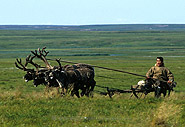 The Nenets drive on sledges pulled by reindeers, even in the summer time. |
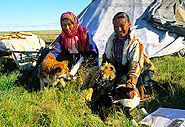 The dogs are not just pets, but are used to gather the reindeers. |
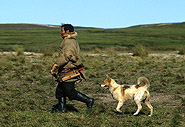 Dog and man at work. |
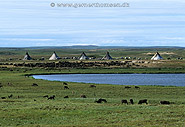 Camp in August, close to the Kara Sea. |
| |
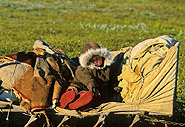 The youngest are just passengers on the sledge. |
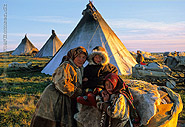 Skin clothes are used most of the year – even in August. |
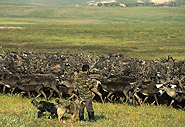 The reindeer herd is being gathered. |
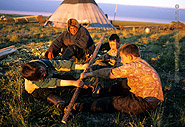 Competition(the great thing is to pull the competitor towards yourself). |
| |
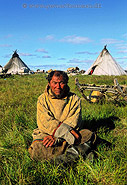 Time for relaxing
in the summer warm. |
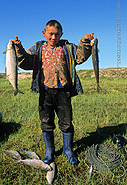 Fresh caught fishes
from the lakes. |
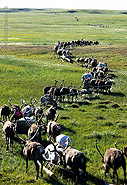 The Nenets move
between the camps in
a long caravan. |
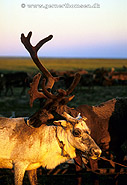 Also the reindeers
are bothered by the mosquitoes. |
| |
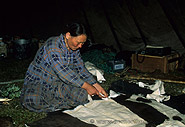 In the summer time the women sew clothes for the coming winter. |
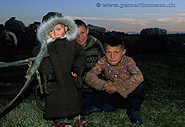 The long summer evenings are appreciated by everyone. |
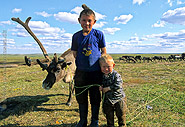 Brothers. |
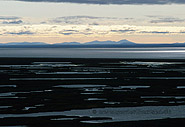 The Kara Sea with the Ural Mountains in the background. |
| |
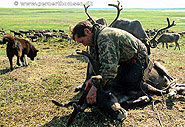 The antlers are cut off the reindeers to be sold for use in potency drug production. |
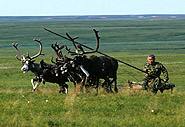 Reindeer race at the tundra. |
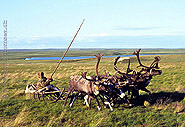 The speed can easily reach
30 km/h. |
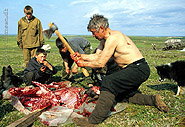 Slaughtering of a reindeer. |
| |
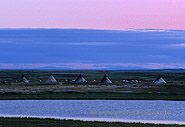 The camps count up to 10 tents (families). |
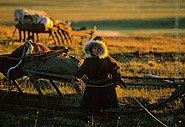 The boys get a lasso in their hands for the first time when they are quite small. |
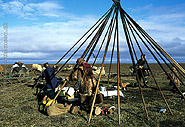 Erecting the Nenet’s tipi-like tents (chums). |
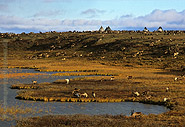 The reindeer herd counts up to 6000 deer. |
| |
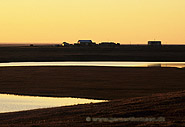 Station 220 km at Gazprom’s railroad to the northern gas fields. |
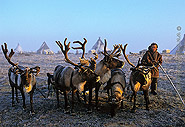 A herder with his reindeer team on cold morning in September. |
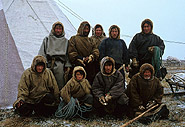 The men from third reindeer brigade of Panaevsk. |
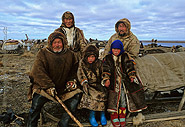 The family Khorolia which I met first time in the autumn 2001. |
| |
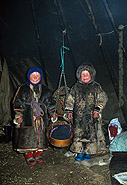 Babies are put in
a cradle which hangs
in the tent. |
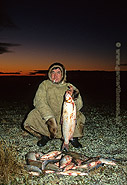 Fresh caught fishes
from the lakes on Yamal Peninsula. |
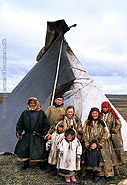 Up to three generations
are living together in
the tents. |
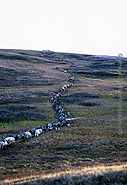 Moving with the camp
during autumn. |
| |
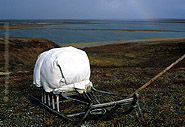 A sledge with winter gears parked on the tundra. |
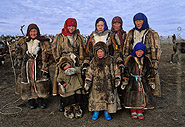 Women and children from the third reindeer brigade of Panaevsk. |
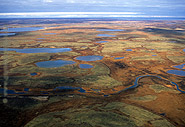 Flat as a pancake (Yamal seen from a helicopter). |
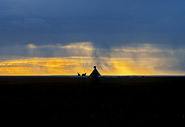 The most tame reindeers of the herd get close to the tents. |
| |
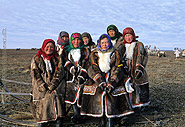 The women from the third reindeer brigade of Panaevsk. |
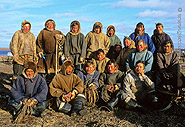 The men from the third reindeer brigade of Panaevsk. |